My Mom Thinks She is in Charge: A Designer Review
As someone who has spent years navigating the intersection of digital design and physical stitching, I approach every new machine embroidery design with a critical eye. It is not enough for a graphic to look good on a screen; it must translate beautifully into thread. Today, I am evaluating the design titled My Mom Thinks She is in Charge That s so Cute. At first glance, this piece falls squarely into the Crafts category, offering a playful message that resonates deeply with family dynamics. However, before I commit this to a client order or my own shop inventory, I need to understand how it performs when converted from a digital file to a tangible finished product.
The Visual Personality and First Impression
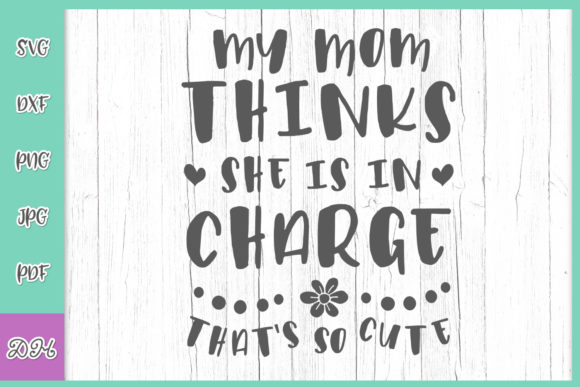
When I first opened the preview files, the mood was immediately clear. This is not a serious, formal design. The phrase "My Mom Thinks She is in Charge That s so Cute" carries a humorous, affectionate tone that suggests a lighthearted rebellion or a loving acknowledgment of parental authority. Visually, the layout relies heavily on typography, which presents both an opportunity and a challenge for embroidery. The text needs to be legible without becoming a dense block of thread that could cause puckering.
For a designer, the key question is whether the font choice supports the message. In this case, the style appears to be casual and friendly, likely utilizing rounded edges or a handwritten aesthetic. This works perfectly for custom apparel where the goal is to evoke a smile. The simplicity of the concept means it does not rely on intricate fill stitch areas that might obscure details on textured fabrics. Instead, it leans towards clean lines, potentially using satin stitch for the lettering to give it a polished, raised appearance that stands out against fabric backgrounds.
Real-World Application: From File to Fabric
To truly test the viability of My Mom Thinks She is in Charge That s so Cute, I imagined placing it on a heavy cotton tote bag intended for a Mother's Day gift. Tote bags are a staple for any small business owner or Etsy seller because they offer a large, flat surface ideal for text-heavy designs. When visualizing this project, the scale becomes crucial. If the hoop size is too small, the text might appear cramped, making the joke hard to read. Conversely, if stretched too large without adjusting the stitch density, the letters could lose their definition.
I also considered how this design would look on a sweatshirt. Sweatshirt embroidery requires careful attention to stabilizer usage because the fabric has a natural nap and stretch. A design like this, which is primarily text-based, benefits from a strong backing to prevent the threads from sinking into the fleece. The result would be a high-quality handmade product that feels professional yet personal. For parents looking for a personalized gift, seeing this phrase stitched onto a cozy hoodie adds a layer of warmth that a printed t-shirt simply cannot match.
Another compelling use case is the embroidered patch. Creating patches allows you to control the background color independently of the garment. You could sew this design onto a black felt backing with white thread for high contrast, then attach it to a denim jacket or a canvas backpack. This versatility makes the digital embroidery file valuable for a wide range of merchandise, from boutique branding items to holiday embroidery gifts.
Navigating Technical Challenges
While the design is promising, there are specific scenarios where caution is required. Text-based graphics can be tricky on curved surfaces like caps. If the text wraps around the crown of a hat, the letters may distort unless the design is specifically engineered for 3D application. Similarly, using this on thin fabric or stretchy materials like jersey knit demands a robust stabilizer strategy. Without proper support, the tension from the needle could cause the fabric to pucker, ruining the readability of the phrase.
Furthermore, the color palette matters immensely. On dark fabrics, light thread colors work best to ensure visibility. However, if you attempt to use this design on a busy patterned fabric, the thread colors might get lost in the noise. As a reviewer, I always recommend testing the design on scrap fabric first. Check the running stitch outlines and the fill areas to ensure there are no gaps or excessive thread buildup. This step is non-negotiable for maintaining customer trust and ensuring the final item looks as good as the mockup.
Strategic Use for Craft Businesses
For the craft business owner, this design offers a unique selling point. It taps into the emotional connection between parents and children, making it a prime candidate for giftability. Whether sold as a standalone tote bag design or part of a larger collection of family-themed items, it has the potential to drive engagement. However, success depends on presentation. Using high-quality printable mockups to showcase the design on various products helps potential buyers visualize the outcome.
It is also important to consider the licensing terms associated with the Graphics file. While the description mentions formats like Svg, Png, Dxf, Jpg, and Pdf, these are often used for cutting machines or printing rather than direct embroidery. Always confirm that the file includes the actual stitch data (such as .pes, .dst, or .exp) if you intend to use it for stitching. If you plan to sell finished goods, ensure your license permits commercial use. Selling commercial embroidery projects without the right permissions can lead to legal issues and damage your reputation as a creative entrepreneur.
Final Verdict and Practical Notes
In conclusion, My Mom Thinks She is in Charge That s so Cute is a charming addition to any designer's library, provided it is executed with care. Its strength lies in its relatable humor and clean aesthetic, making it suitable for baby embroidery, nursery decor, and adult apparel alike. To maximize its potential:
- Test on Scrap Fabric: Always run a test to check for puckering and thread tension.
- Check Contrast: Ensure the thread color pops against the chosen fabric texture.
- Verify Hoop Size: Match the design dimensions to your machine's capabilities.
- Use Proper Stabilizer: Especially for knits, fleece, or delicate materials.
- Review Licensing: Confirm you have the rights to sell finished items or digital downloads.
By following these steps, you can transform a simple digital graphic into a premium embroidery project that delights customers and enhances your brand. Whether you are a hobbyist creating a one-off gift or a shop owner scaling up production, this design offers a fun, practical way to express love and humor through the art of stitching.